A Place for People Who Like Good Food Without the Fuss

Café culture does not have to be complicated. At its best, it is built around familiar food, decent coffee, comfortable surroundings, and places that people genuinely want to return to. A café might become a regular breakfast stop, somewhere to meet a friend on Saturday morning, or the place you visit when only soup, a sandwich, and something sweet will do.
This site looks at those everyday experiences in practical terms. We explore why certain brunch dishes stay popular for decades, what separates espresso from drip coffee, how simple baking works, why soup and sandwiches remain such a dependable lunch, and what actually happens behind the counter of a small café.
Brunch, Coffee and Everyday Comfort Food
Brunch has grown into much more than a late breakfast. For many people, it is part of the weekend itself. It offers an excuse to slow down, meet people, and eat food that sits comfortably between breakfast and lunch. Eggs, toast, potatoes, pancakes, breakfast sandwiches, and rich comfort dishes continue to dominate menus because they are familiar, flexible, and satisfying.
Coffee plays a similar role. Some people care deeply about beans, grinders, extraction times, and brewing methods. Others simply want a cup that tastes good. Both approaches have a place. Understanding the basics can make café menus easier to navigate and improve coffee made at home without turning a morning routine into a technical exercise.
The Appeal of Independent Cafés
Small cafés tend to develop personalities that are difficult to reproduce on a large scale. The menu may reflect the size of the kitchen. The cakes may depend on what somebody felt like baking that morning. Tables might not match, the daily special may disappear by lunch, and staff may know what regular customers are going to order before they say anything.
These differences are part of the attraction. Independent cafés are often shaped gradually by the neighbourhood around them. They respond to local habits, customer preferences, available ingredients, and the practical realities of running a small business. The result is rarely perfect, but it can feel far more personal.
Start With Brunch
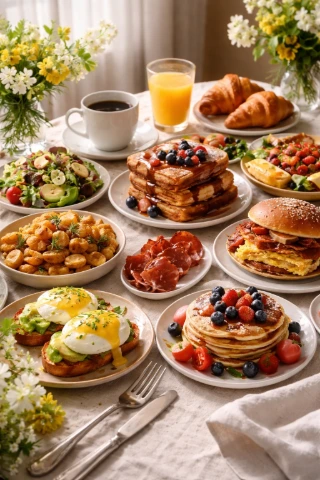
There is a reason brunch menus tend to look familiar wherever you go. Certain combinations simply work. Eggs and toast, crispy potatoes, French toast, pancakes, breakfast sandwiches, bacon, vegetables, cheese, and strong coffee have survived countless food trends because they suit the relaxed nature of the meal.
Our guides take a closer look at the dishes that continue to define brunch and at the small details that separate an excellent plate from one that is merely expensive breakfast.
Why the Classics Keep Returning
A good brunch menu does not need twenty-five unusual ingredients or a paragraph-long description under every dish. Often, the most memorable options are the simplest ones made properly. Eggs need to arrive at the correct texture. Potatoes should have crisp edges. French toast needs enough structure to avoid turning soggy beneath toppings. Breakfast sandwiches need to hold together from first bite to last.
Classic dishes are also easy for diners to understand. Someone can order an omelette while another person chooses something sweet and a third goes straight for a heavy comfort plate. Brunch makes room for all of those choices at the same table.
Why Weekend Brunch Feels Different
Part of brunch's appeal has little to do with ingredients. Timing matters. Breakfast before work is functional. Brunch on a Sunday can stretch into the early afternoon without anybody watching the clock.
That makes cafés natural meeting places. Friends catch up after a busy week, couples turn an ordinary morning into a casual date, and families can meet without organising an evening meal. A strong brunch café understands that the table is part of the experience. People want good food, but they also want somewhere comfortable enough to stay for another coffee.
Understanding Coffee Without Making It Complicated
Coffee menus can appear more complicated than they really are. Espresso, Americano, latte, cappuccino, flat white, pour-over, drip coffee, and cold brew all sound distinct, but most become easy to understand once the basic preparation methods are clear.
From Drip Coffee to Espresso
Drip coffee and espresso begin with the same basic ingredient but create very different drinks. Drip brewing passes water through coffee grounds more gradually, producing a larger cup designed to be enjoyed over time. Espresso uses pressure to create a small, concentrated shot with greater intensity and texture.
Espresso also acts as the base for many familiar café drinks. Add hot water and it becomes an Americano. Combine it with steamed milk in different proportions and you move through lattes, cappuccinos, flat whites, and related drinks. Once that basic structure makes sense, ordering becomes considerably easier.
Making Better Coffee at Home
Improving home coffee rarely requires buying the most expensive machine available. Fresh beans, reasonably accurate measurements, clean equipment, appropriate grinding, and decent water can make a larger difference than complicated equipment used badly.
Consistency is the useful goal. Make coffee the same way a few times, notice what you like or dislike, and change one thing at a time. Slightly more coffee, a different grind, or a shorter brewing time may be enough to transform the result. The process should make your morning easier, not become another chore.
There Is Always Room for Something Baked
A café counter filled with brownies, cookies, slices, loaf cakes, and squares has a different kind of appeal from a formal dessert menu. You can see what is available, choose something without much commitment, and pair it with coffee whether you are staying for an hour or stopping for five minutes.
Why Simple Baking Rewards Practice
Brownies are a good example. A basic recipe may contain only chocolate, butter, sugar, eggs, flour, and perhaps cocoa, yet small changes create completely different results. Mixing too aggressively, measuring inaccurately, or leaving the tray in the oven a few minutes too long can move the texture from fudgy to dry.
Cookies, tray bakes, and simple cakes behave in similar ways. Experienced bakers develop an instinct for when dough feels right or when a bake is ready before the timer rings. That confidence is usually the result of repetition rather than complicated professional techniques.
Homemade Does Not Need to Mean Perfect
One of the nicest qualities of café baking is that it can look handmade. Brownies do not need identical edges. Cookies do not need to be perfectly circular. A loaf cake can lean slightly to one side and still be the first thing to disappear from the counter.
What matters more is freshness, texture, balance, and consistency. Good scratch baking should taste deliberate even when it does not look factory-produced. Seasonal ingredients and changing recipes can also keep a small selection interesting without requiring a café to carry dozens of desserts every day.
Lunch Can Still Be Simple
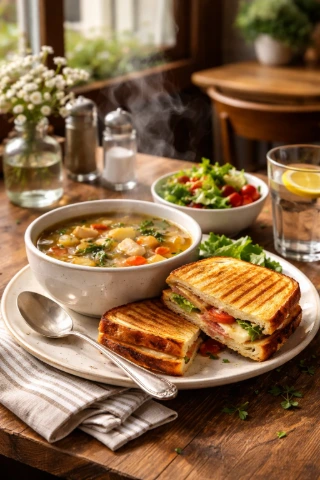
Some food combinations survive because there is little reason to improve on the basic idea. Soup and a sandwich is one of them. It works in cold weather, fits into a weekday lunch break, and gives cafés endless room to vary ingredients without losing the comfort of something familiar.
The same principle applies to many good café menus. Simple food becomes memorable when every part is treated with care.
Building a Better Sandwich
A sandwich is easy to assemble but surprisingly easy to get wrong. Too much filling makes it difficult to eat. Too much sauce turns the bread soft. Thick ingredients can slide out after the first bite, while dry fillings make the entire thing feel unfinished.
Good sandwiches are about proportion. Bread needs enough structure for the filling, rich ingredients benefit from something sharp or fresh, and texture matters just as much as flavour. A crisp vegetable, pickle, toasted surface, or fresh leaf can stop a sandwich from feeling heavy.
Why Homemade Soup Has Stayed Relevant
Soup gives small kitchens unusual flexibility. It can be light or substantial, smooth or chunky, vegetarian or meat-based. It can also change naturally with the seasons, using tomatoes and lighter vegetables in warmer months and roots, pulses, squash, or richer stocks when temperatures drop.
Paired with bread or a sandwich, soup becomes a complete meal without needing to be elaborate. That is precisely why the format continues to appear on café menus. It suits customers, works within smaller kitchens, and can be adapted constantly without losing its identity.
What Really Happens Behind a Small Café Counter
From the customer side, cafés can appear pleasantly simple. Coffee comes out of the machine, food arrives from the kitchen, cakes sit behind glass, and somebody wipes down the table after you leave. Behind that calm surface is a business managing dozens of moving parts at once.
Running a small café involves menu planning, stock, staffing, food preparation, cleaning, equipment, suppliers, pricing, waste, opening hours, and the constant challenge of making limited space work efficiently.
Why Small Menus Often Work Better
A compact kitchen cannot reasonably prepare everything. Each new menu item creates another set of ingredients that must be stored, prepared, monitored, and replaced when they expire. Too much choice can create waste while making it harder for staff to produce each dish consistently.
Well-planned café menus often allow ingredients to work across several dishes. Roasted vegetables might appear in a sandwich, brunch plate, and soup. Bread can move from breakfast toast to lunch service. Sauces and dressings can be prepared in batches and used carefully across different combinations.
A shorter menu is not necessarily a sign of limited ambition. It can show that a kitchen understands what it can do well.
Why Regular Customers Matter So Much
A visitor who spends heavily once is useful. A customer who returns three mornings every week can be essential.
Regulars bring predictability to a business where costs continue even on quiet days. They also create atmosphere. Familiar faces make a café feel established, and those customers often recommend the place to friends, bring relatives, or become the first people to try a new menu item.
That loyalty generally cannot be forced through marketing. It comes from repeated good experiences: coffee made consistently, food people look forward to, fair treatment, and a room they feel comfortable returning to.
Why Neighbourhood Businesses Matter
Independent cafés do not exist separately from the streets around them. They sit beside shops, bakeries, offices, homes, parks, schools, and other businesses, becoming part of the everyday geography people use to understand an area.
Small Businesses Help Give an Area Its Character
People often describe neighbourhoods using the businesses found there. They mention the bakery near the corner, the café opposite the park, the old shop beside the station, or the lunch place everyone seems to know. These locations become landmarks even when they are modest.
Independent businesses can also respond more directly to local preferences. A café near offices may focus on weekday lunches and takeaway coffee, while one in a residential area might build its trade around weekend brunch and families. Each business adapts differently, creating variation between streets rather than making every area feel interchangeable.
A Café Can Be a Small Social Space
Not every customer walks into a café looking for conversation. Some want to work quietly. Others want a quick coffee and nothing more. Yet cafés still create opportunities for people to see familiar faces and share space with others outside home or work.
That modest social role matters. People meet friends, interview potential employees, study, read, work, celebrate birthdays, or simply sit somewhere while waiting for the next part of the day. A café does not need to call itself a community hub to become one naturally.
Find Your Way Around
There is much more to café culture than choosing between tea and coffee. The food on the plate connects to practical kitchen skills, while the atmosphere of the room connects to the people and business decisions behind it.
Across these guides, we look more closely at:
- brunch classics, including eggs, French toast, breakfast sandwiches, and comforting potato-based plates;
- coffee brewing methods, espresso, milk drinks, and practical ways to improve coffee at home;
- scratch baking, including brownies, cookies, squares, and the techniques that create reliable results;
- soup and sandwich lunches and why simple combinations remain so satisfying;
- the realities of operating a small café, from menu size and margins to staffing and regular customers;
- independent businesses and the role they play in shaping neighbourhood identity.
Where Good Café Culture Really Begins
The strongest neighbourhood cafés rarely depend on one dramatic idea. Their appeal is usually built from smaller things: coffee that tastes right, food people genuinely want to eat, cakes worth adding to an order, staff who know what they are doing, and a room that feels comfortable without trying too hard.
Those qualities also explain why independent cafés can earn such strong loyalty. They become part of routines rather than occasional destinations. Someone stops for coffee before work, returns for lunch later in the week, and eventually brings a friend for brunch on Saturday. Over time, a business becomes familiar.
That is what makes café culture interesting. It is not only about food trends or perfect espresso. It is about the relationship between cooking, hospitality, small businesses, and the everyday places where people choose to spend their time.